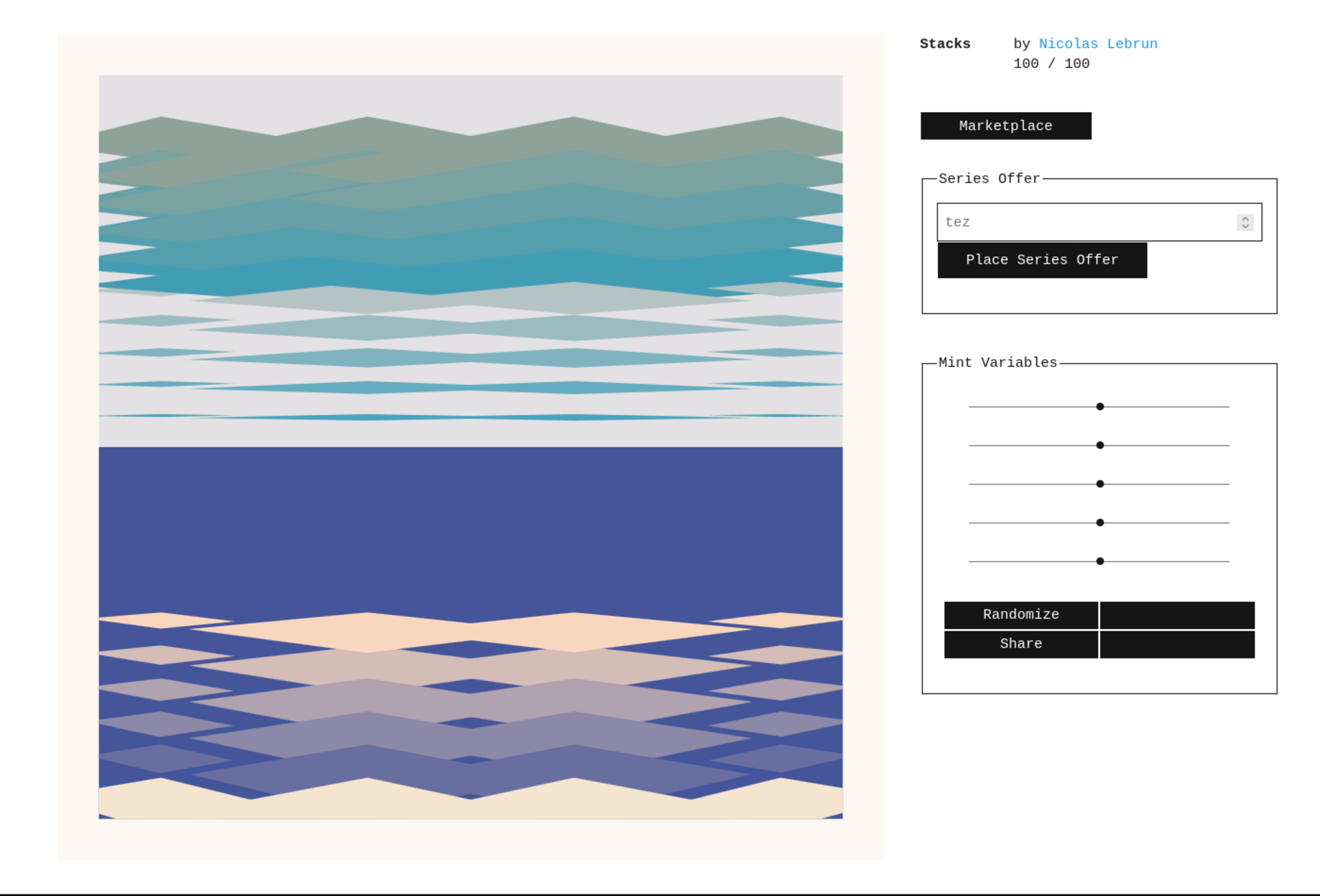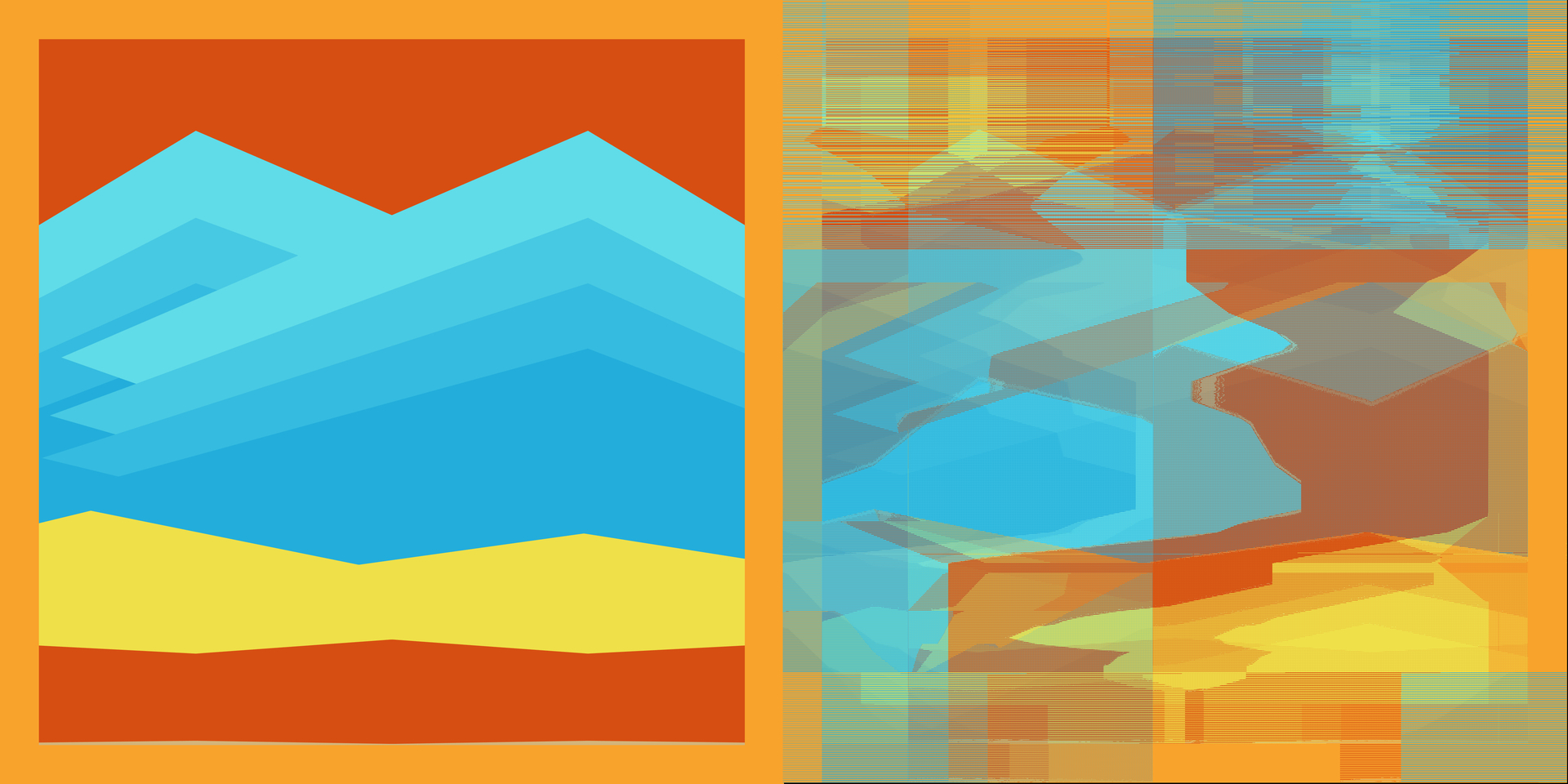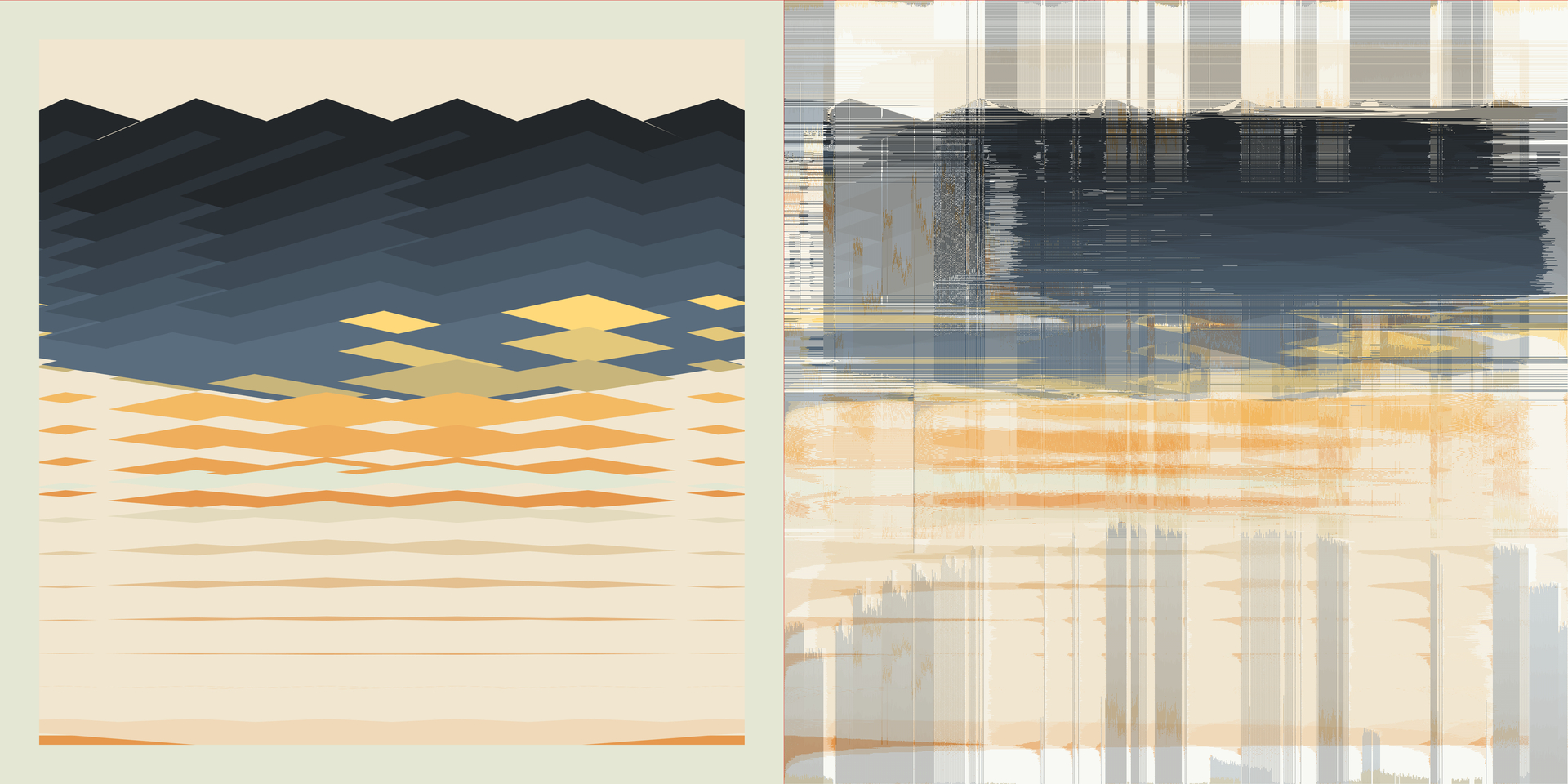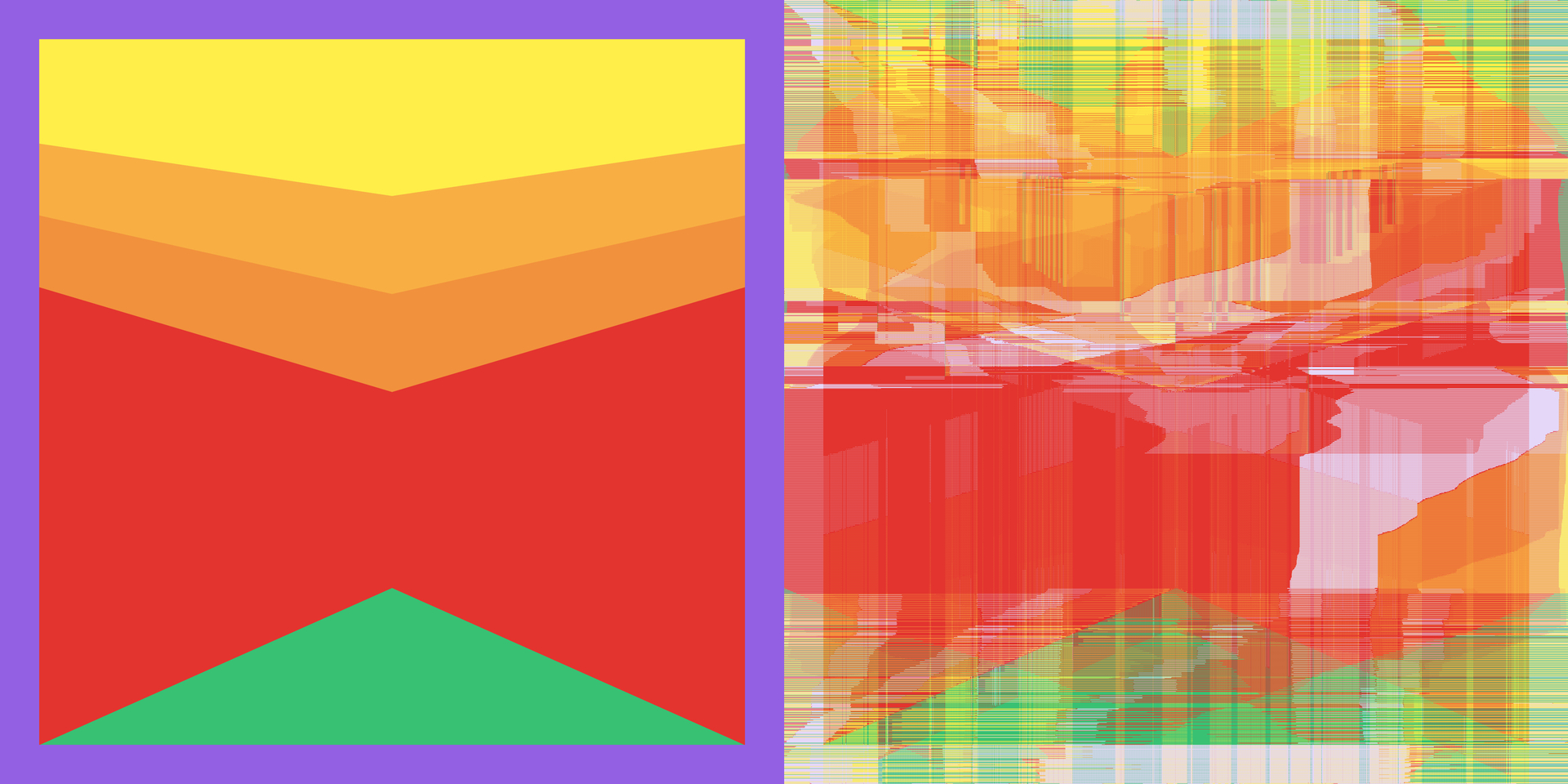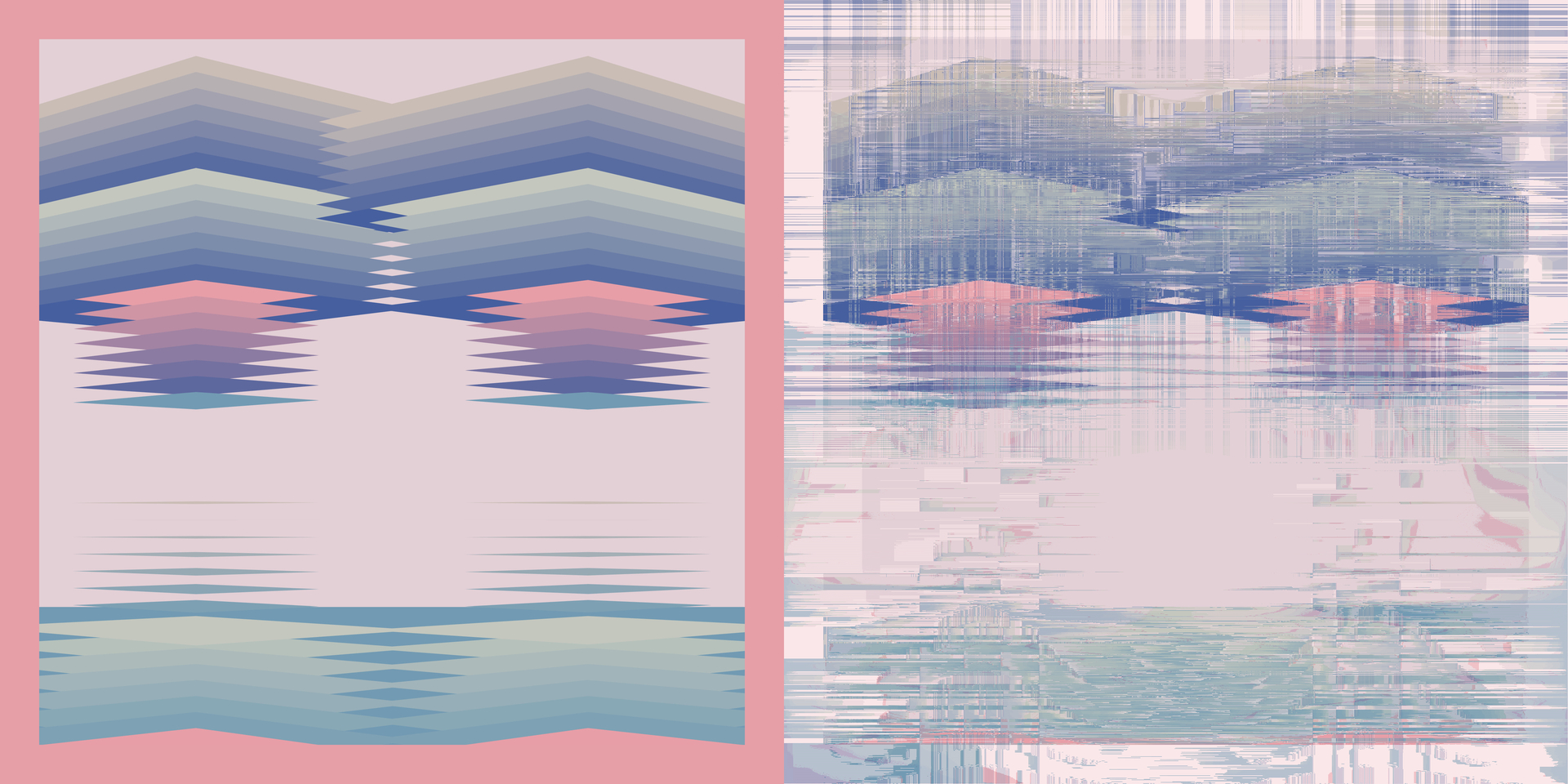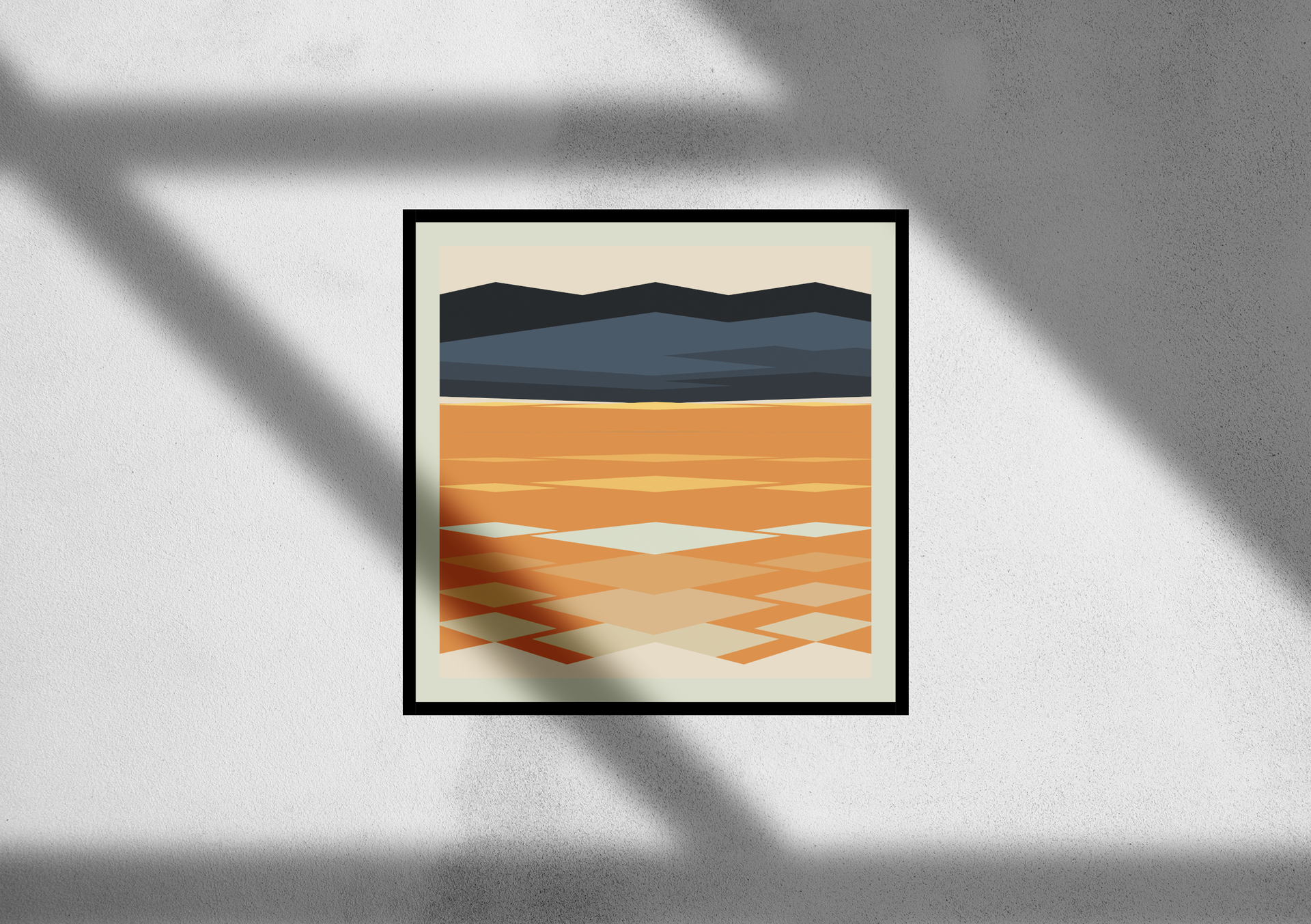
JavaScript and Java (Processing) programs, two-part series on Tezos, 100 editions of each, variable dimensions, 2023.
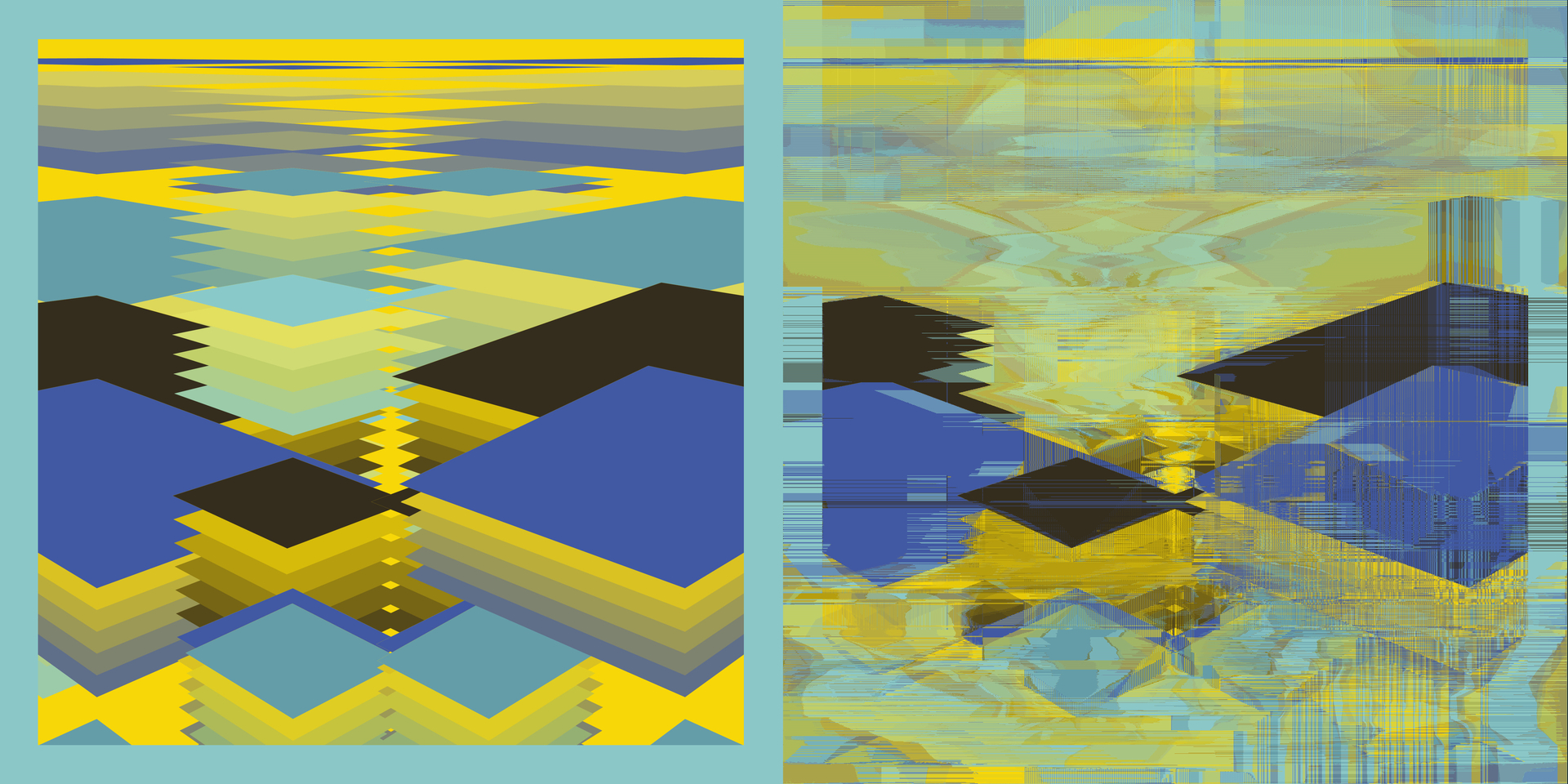
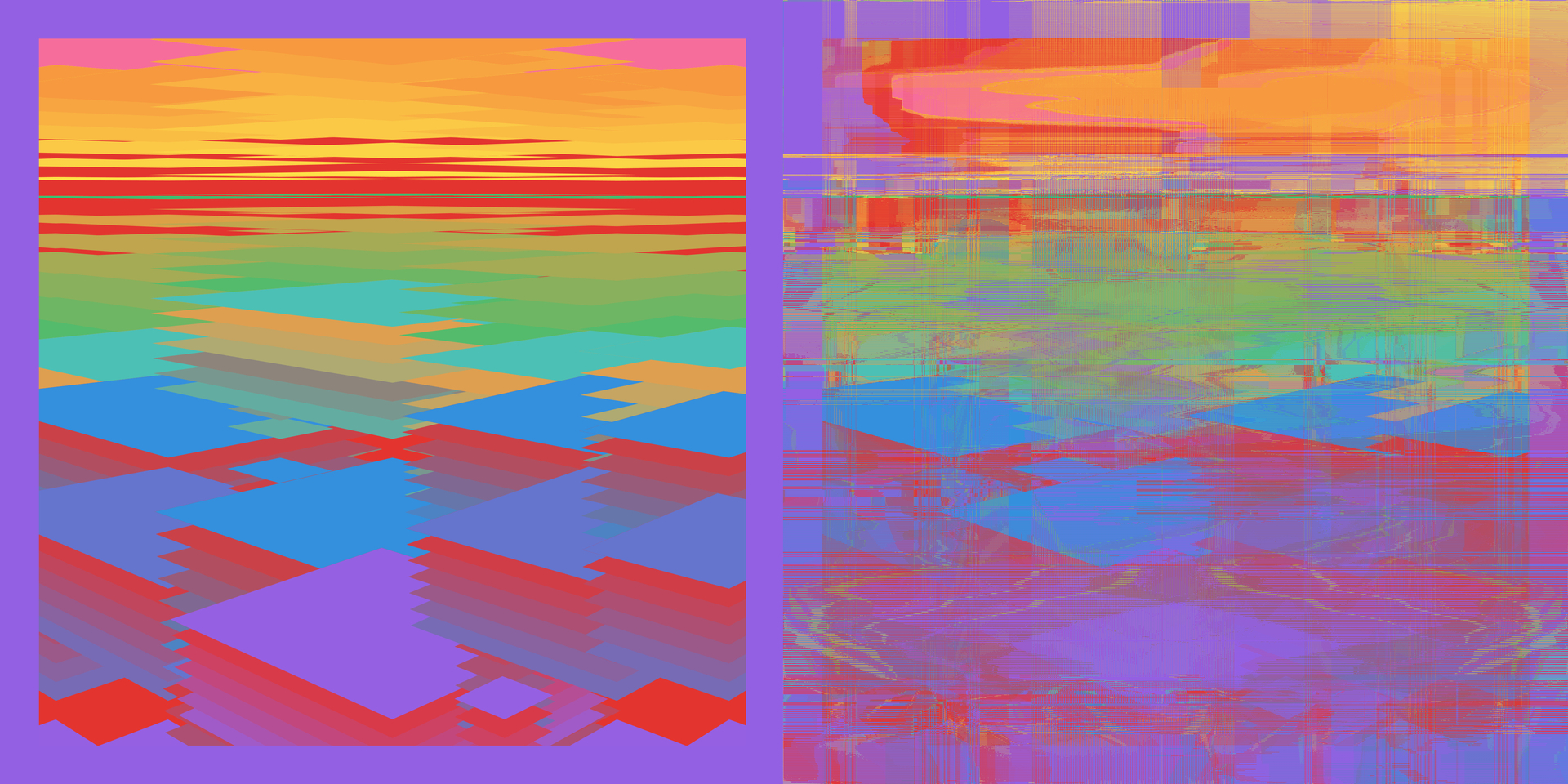
Stacks and Stacks Unstacked are two series that operate through exchange: the collector who co-creates an edition of Stacks receives another as a gift. This new edition is generated from the visual of the first edition; to do this, a program that sorts pixels by brightness or contrast is used to obtain an alternative version of the first work it has just created.
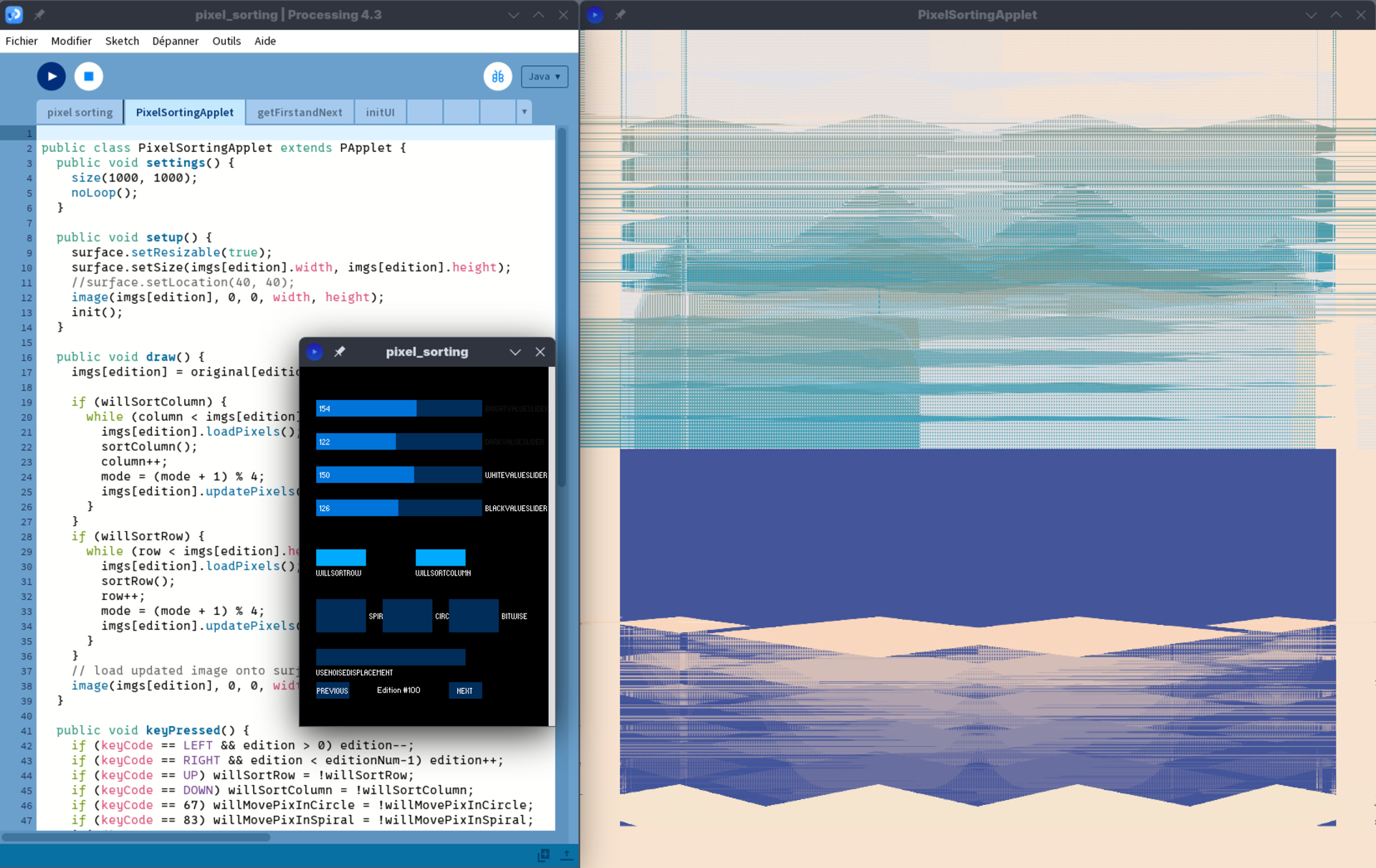
This process explores the modalities of generative art within the blockchain; it is an experiment involving, on the one hand, configurable works that result in editions available instantly, and, on the other hand, works produced locally on the artist’s computer to be sent back and uploaded to the network after a certain delay (human labor).
Although both involve algorithmic art and protocols, the two programs and the editions they generate do not share the same properties. The program that generates the configurable editions is fixed; the same protocol is applied to co-create all 100 editions, with only the parameters chosen by the user changing.
This first program is very simple; it stacks faces by tilting them according to two vanishing points. The user can change the number of stacks, the number of planes that compose them, the position of the vanishing points, and the colors used to draw the composition.
The second program evolves throughout the creation process; the code changes based on the compositions created using the first protocol. The artist can add or remove conditions and adjust the various thresholds that allow them to arrange the pixels in the Stacks editions. The Unstacked Stacks generator includes a graphical interface (similar to Stacks’) that also allows users to fine-tune the settings used to generate the unstacked version.